It’s funny how I always hesitate to say I enjoy listening to K-pop. When someone asks me, “What type of music do you regularly listen to?” I usually reply by recommending Lauv and Ruel —it’s true that I’m a huge fan of both artists, but nowadays, I’ve grown a liking for K-pop songs. Yet, the reaction I often receive is “oh so you’re that basic Korean fangirl.” Even my brother responds in this way. So despite my interest in this genre, I sometimes am embarrassed about admitting it. Does preferring K-pop over other genres make me a person with a bad taste? Why exactly does appreciating K-pop as a Korean make someone “basic”?
Although I haven’t found the perfect answer yet, during my sociology lectures, I think I’ve grasped a better understanding of why this may be the case. It seems to me that society has framed our perception in this specific way. Today, an individual appears to be respected or “cultured” when they have “an eclectic variety of tastes, experiences, interests, and hobbies”—so-called omnivorousness in sociology terms. This is evident in the college admissions process, as most universities claim to be looking for a well-rounded student with diverse identities. We observe this in our daily lives as well. When someone knows aesthetic songs of an unknown artist, people tend to gain interest in this person and define them as an individual with unique and distinct interests.
To fit these standards, however, cultural appropriation is indispensable. This sociology term is interpreted as an “adoption of elements from a culture that you are not a part of. Typically a member of a dominant culture adopting elements from a minority culture.” For instance, a Western person savoring kimchi. Western culture tends to play the dominant role in our society and the attraction for pop songs is not thought of as “typical” or “basic.” In other words, when an American reveals that they find pleasure listening to pop songs, it isn’t looked down on. Still, enjoying multiple cultures is deemed as more appealing.
On the other hand, when a Korean selects K-pop as their favorite genre, it is regarded as plain, simple, and perhaps even uninteresting. This is where cultural exclusion takes place, in which “omnivorousness is patterned in ways that exclude cultural products associated with specific groups.” In a research study published by the American Sociological Association, researcher Bethany Bryson concluded that certain song genres are less favored due to cultural exclusion. Simply put, when asked about their music preferences, respondents would say, “I like everything…except rap, gospel, country, and heavy metal.” Hence, some Koreans (like me) avoid disclosing their fondness for K-pop, since when a person from a minority culture appreciates their own culture, it may be considered dull for not favoring the dominant culture. When in reality, individuals should have pride, or at least not be ashamed of their country’s culture.
In this sense, when someone implies or explicitly states that their favorite music, snack, etc is from their own culture, it is not your duty to judge them as “basic.” They’re not basic, you’re just ideating them as someone basic. The notion of omnivorousness that society promotes today has built your perspective in such a way. Appreciation of one’s own culture should rather be encouraged than discouraged, especially among minority cultures. Without this change, the world may remain dominated by Western culture. Different cultures serve a different purpose and one culture can not be singled out as perfect.
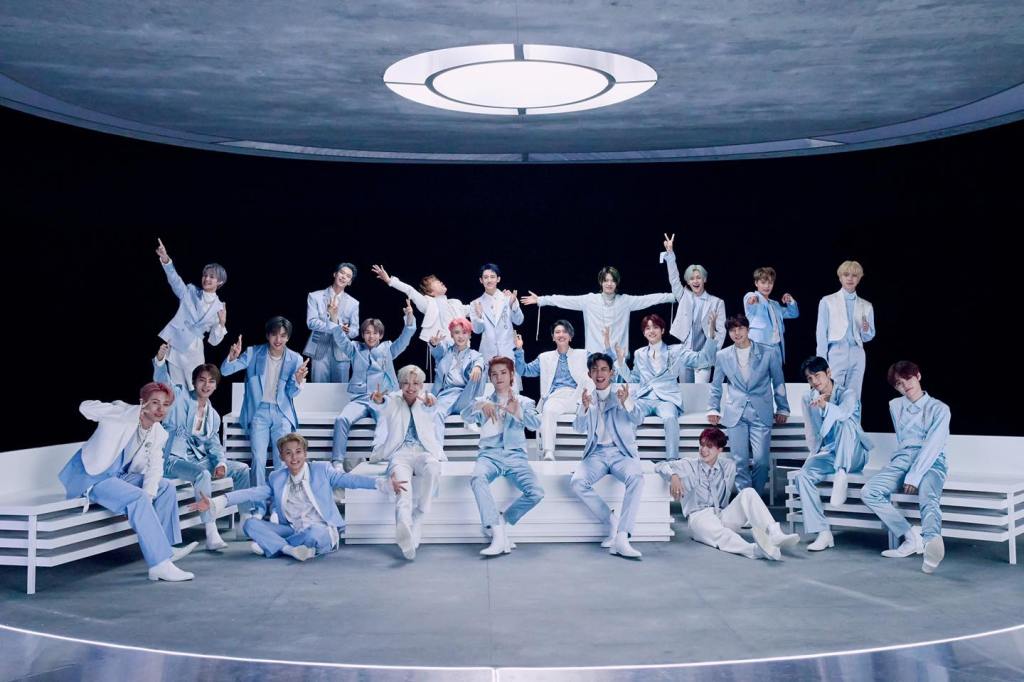
On a lighter note, stan NCT and stream their new songs!
 A WORKING VACATION