Directed by: Sofia Coppola
Oscar Awards: 2004 Best Writing, Original Screenplay
“Lost in Translation” presents a comedic story of two Americans accidentally meeting at a hotel in Tokyo, ultimately falling in love. Movie star Bob Harris travels to Tokyo to shoot a commercial advertisement for the whiskey company Suntory. On the other hand, college graduate Charlotte merely comes along to accompany her husband John and pay a visit to a few of her Japanese friends. While John is occupied throughout most of the trip, Charlotte travels all alone to experience some of Japan’s distinct offerings. Charlotte and Bob first stumble across one another in an elevator, only to glance and smile. Finally sharing a conversation at the hotel bar, both Bob and Charlotte grow fond of each other, feeling a sense of ineffable comfort when together. Charlotte further introduces Bob to her friends, and the two roam the streets, enjoying the moments of their lives. From time to time, they share life talks about their troubles, the odd culture of Japan, and their marriage status. More than just friends, Bob and Charlotte develop an unbreakable bond through their platonic relationship.
The title of the screenplay is a double entendre, representing both the literal and implicit message of the movie. As written in the title, both protagonists are lost in a foreign country, unable to interpret neither the signs nor the language of the unfamiliar environment. Bob becomes confused in a hospital as an old man approaches him in an effort to communicate. Charlotte, looking at the menu in a Japanese restaurant, states everything looks the same. Though this obstacle is not easily overcome, the individuals learn to confess and calm in the presence of each other. Both “lost” in their personal ways, Bob relieves Charlotte, commenting that he is “not worried” about her. Hence, Bob sincerely offers guidance in crucial life advices to Charlotte, who appreciates this benevolence.
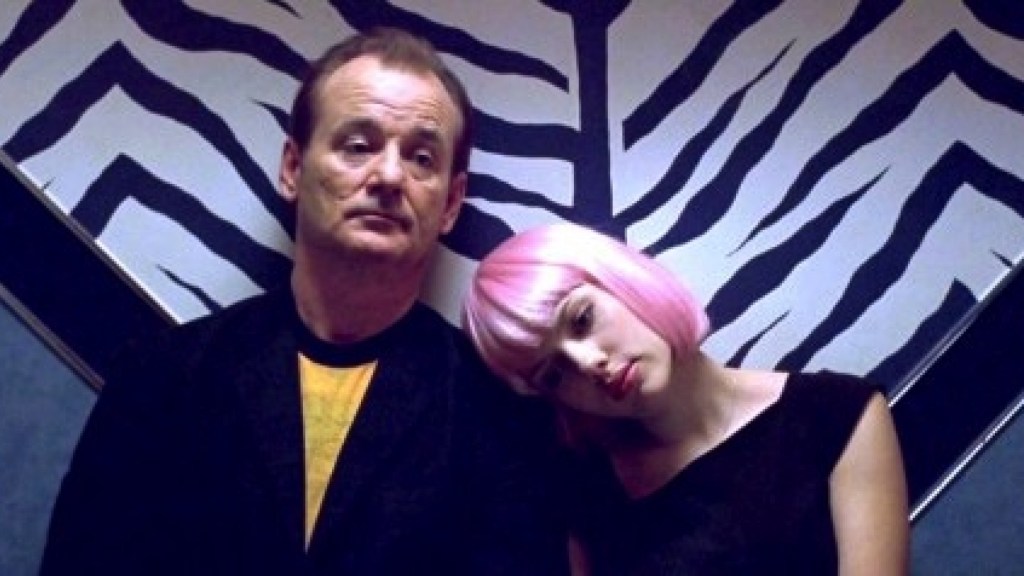
The characterization of Bob and Charlotte is distinct, allowing them to develop as both round and dynamic characters. The old man, who evidently loves and cares for his family, is taken away by the countless hours spent out of home. However Charlotte solely has John by her side, allowing her to mature as an independent woman. Unlike Bob struggling to control a running machine at the gym, Charlotte effortlessly journeys from place to place to absorb the country’s culture.
Yet what brings the two excessively different individuals together is the inability to adjust to an unfamiliar culture and unstable emotions. Regardless of his stable job, Bob handles with a sense of depression that continues to crawl upon him while in isolation. Especially after the birth of his first child, Bob expresses that “your life, as you know it, is gone…never to return.” This may appear as though the man advises the young adult to avoid pregnancy; however, he adds that these children are the “most delightful people you will ever meet in your life,” urging the delivery of a child. Meanwhile Charlotte seeks to settle upon a proper occupation—one in which she owns talent. She continues to explore diverse hobbies—from photography to writing—to find the answer but has only encountered failure in every attempt. Whether after marriage or after college, the individuals supposedly acknowledge the fights they are wrestling through.
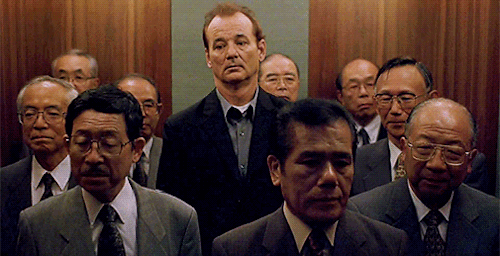
An evident flaw of this screenplay, however, is its misuse of humor to illustrate the Japanese, or Asians in general. During a deep conversation, Bob playfully mentions to Charlotte that in Japan, everyone pronounces the “l”s as “r”s, and vice versa—mimicking the message he received that read “Have a safe fright.” This leads to another scene where a Japanese woman enters Bob’s hotel room, requesting him to “lip” her stockings; then, she vocalizes disturbing noises intended to hint to others that she had sex with the movie star. This disturbing scene portrays Japanese women as psychotic individuals who yearn to seduce men. Another humorous scene was in the elevator, when Bob stands tall among a crowd of tiny Japanese men. These scenes serve a clear motive to entertain the audience, yet the director has crossed the line of appropriateness. In fact, racism is quite prevalent throughout the story, as these specific moments mislead the audience to develop an erroneous stereotype of Japanese people.
Additionally, not only was the Japanese culture misrepresented, but the screenplay disappoints the viewers as it could’ve delved deeper and discovered beauties as well. One of the most appalling scenes was the naked women pole dancing and seducing men at a bar. The simple depiction of these settings enables the American, or non-Japanese, audience to perceive all Japanese customs as bizarre and unlikable. There are special, emotional, and meaningful cultures in Japan that are unspoken of; perhaps women in kimonos arranging flowers was an ideal scene, revealing the hidden, engaging traditions. To a certain extent, it is clear that Japanese characters and culture is shown in such a one-dimensional manner to spotlight the two Americans, Bob and Charlotte; however, when the traditions are imitated for “fun,” the entire purpose of Japan becomes a mockery.
Though a well-written screenplay with elaborate details, original plot, and noteworthy characters, the overuse of Japanese culture to generate laughter has resulted in a movie with stereotypes and racism. Although Charlotte and Bob may not be the best fit for Japan and for each other, they bring back relaxation to their lives through the quick yet adventurous trip. Lost in translation and lost in their identity, the curtain falls with the two kissing on the streets—their first “sexual” encounter, proving the pure innocence that powered their true love.
 A WORKING VACATION