Directed by Bong Joon-Ho, “Parasite” shares a plot-twisted story of three families living together within one household. The film opens with the Kim family struggling to locate public wifi, living under substandard conditions with none of them employed. They solely rely on the meager income received through folding pizza boxes. However, everything changes when a friend offers the son Giwu to tutor Da-Hye, the daughter of the wealthy Park family. Extremely gullible, the Park family falls for Gi-Wu’s plan. Soon, the entire Kim family is employed: the mother Choong-sook as a housekeeper, the father Gi-Taek as a driver, and the daughter Gi-jeong as a psychiatric art tutor. Yet, not too longer after, the Kims come across another homeless man surviving in a secret pathway underground—Geunse, the husband of the former housekeeper Kook Moon-Gwang. The couple then ascertains the Kims were one fraud family. In attempt to silence Moon-Gwang, Choong-sook reluctantly murders her. The start of all chaos.
Each of the families own a distinct trait that differentiates one from another. The Parks are often described as benevolent and credulous. The mother Yeon-gyo appears exceptionally naive, as she over-trusts the Kim family without any suspicion. On the other hand, the rich are also portrayed as hypocritical—while maintaining a “pure” reputation, the Park parents use drugs and underwear as a fetish during a sexual scene. A life of meaningless luxury. In contrast with the Parks, the Kims habitually spit curse words. Their gait resembles cockroaches (or parasites), particularly due to their bony figure. Although at a similar social status, unlike the Kims, Moon-Gwang and Geunse are illustrated as the eerie, “ghost-like” subjects. In this way, each character is well-developed throughout the movie.
Moreover, the noteworthy acting of the cast built on the realism. Gaining popularity through past films “Snowpiercer” and “A Taxi Driver”, Song Gang-Ho was once again selected to play the fierce, cowardly Gi-Taek. Alongside Song, also known for the teenage baseball player on “Train to Busan,” Choi Woo-Sik acted the attractive, immature son (Gi-Wu)—the source of all trouble. Famed for his unique, deep voice on Korean drama “Pasta,” Lee Sun Kyun makes an appearance as the affluent, young CEO father of the Park family. Though the screenplay was remarkably written, the experienced actors added charm to each role, producing a comedic movie full of chemistry. Not only the cast, but the director was esteemed for his screenplays “Okja,” “Snowpiercer,” and “The Host,” pointing to the flaws of our society.

The dialogue in “Parasite” is abundant with foreshadowing and repetition. One apparent repetition is the mention of the sickening smell of the Kim family. Da-Song, the son of the Park family, first recognizes this stench, sniffing at both Gi-Taek and Choong-sook. Unable to identify the cause of it, the Kims soon realize this stench was neither the laundry detergent nor the shampoo, but the reek of their semi-basement house. In fact, it marks the turning-point in the movie when Mr. Park grimaces at Geunse, blocking his nose at the familiar stench. This moment, Gi-Taek glares, stabbing him from the back. An abrupt murder—one nobody would’ve expected from the loving father. Hence, the stench, a seemingly negligible aspect, draws that clear line between the high and low classes.
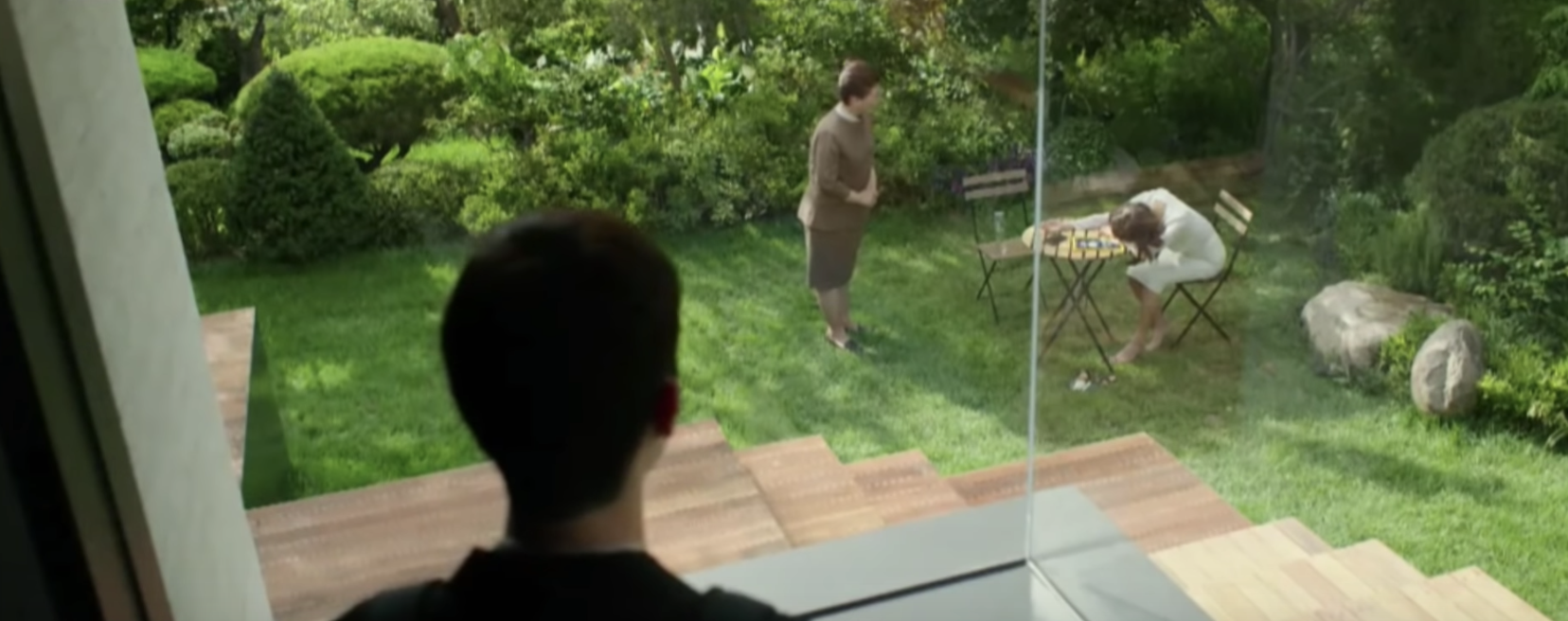
Choong-sook is dismissed, because the Park family claims she has crossed this “line”.
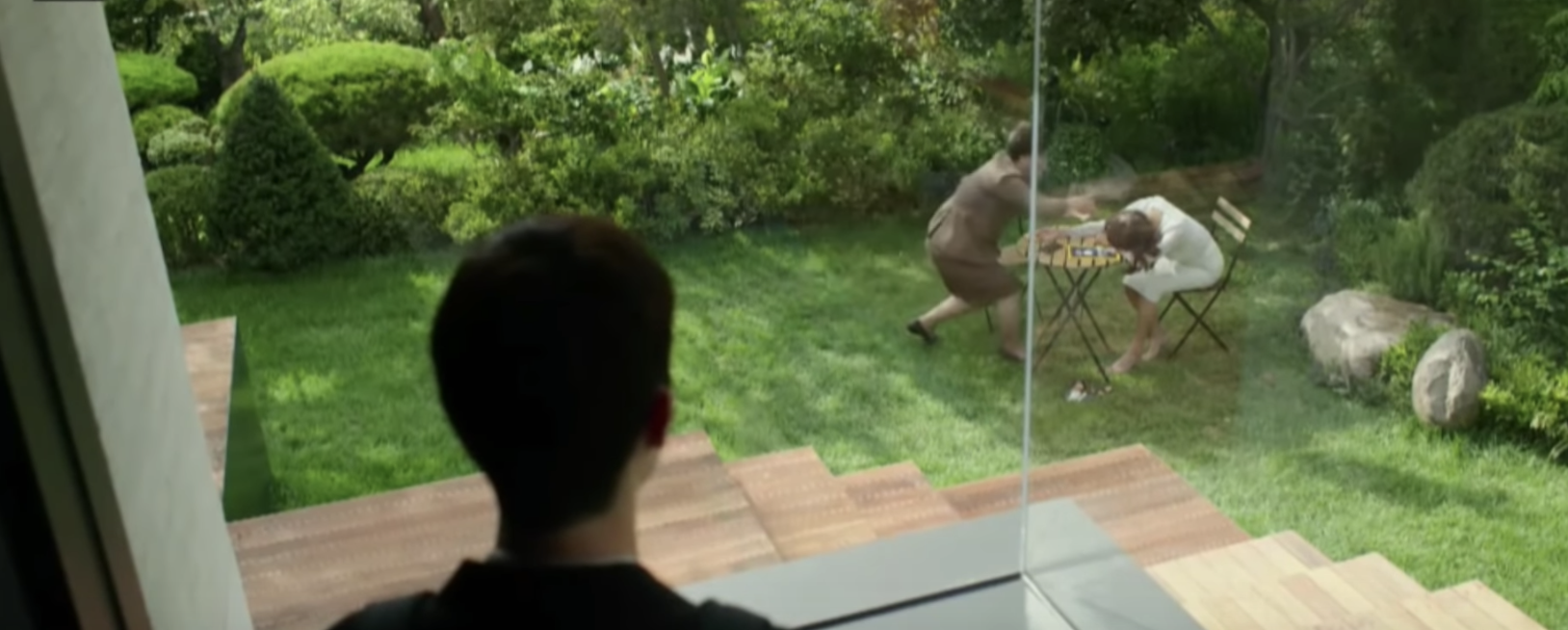
she crosses this “line” as she attempts to waken Yeongyo from her sleep.
Another repeated phrase is “나 진지해. 대학 가면 정식으로 고백할거야. (I’m serious. I will officially confess to her when she graduates).” When requesting Giwu to replace his spot while he studies abroad, Giwu’s friend first mentions this phrase, suggesting his affection for Da-Hye. After Giwu earns his new job, he restates this dialogue verbatim. This scene implies Giwu has mistaken his social status, overwhelmed by joy. Rather than sounding selfish though, the viewers feel pity for Giwu.
He further claims that the stone, a gift from his friend, continues to accompany him, trailing along. There were multiple interpretations of this stone, many asserting the Kim family was merely attaching meaning to a worthless object. However, the screenplay seems to refer to the Korean idiom “굴러온 돌이 박힌 돌을 뺀다 (Direct translation: a passing/rolling stone drives out the fixed stone),” often alluding to betrayal. Specifically, the poor Kim family strived to replace the rich Park family. Yet, viewing the movie from a wider perspective, the Kim family only succeeded in driving out Moon-Gwang and Geunse. In the end, Gi-Taek ultimately suffers in the basement, exactly where Geunse hardly survived. To use of repetition places emphasis on the overarching message of the screenplay.

At the end of the movie, one witty statement remains memorable: “그래봤자 넌 박 사장 가족이 갑자기 집에 돌아오면 바퀴벌레처럼 샤샤샥 사라지겠지. (Regardless, when Mr. Park comes home, I bet you will all scatter away like cockroaches).” Choong-sook’s words turn into reality, when the Park family returns from a camping trip without warning. The Kim family disperse into separate corners, finding a way to clean the home. The scene is set on a dark, rainy night, forcing the viewers to turn anxious with the main characters. These hints allow the audience to undergo a more thrilling experience in the theaters.

The Park children names start with ‘다’ (Da), signifying their affluence.
In addition to the well-written script, the transitions were smooth. The disparity between the poor and the rich is clearly shown when the Kim family rushes down the endless stairs on the rainy day. Beginning from the second floor of the Park family’s house, Giwu, Gi-jeong, and Gi-Taek rush down the staircases, down the hill, through a tunnel, and again down the staircases. For a few seconds, Giwu stares down at the running water that flows beneath him, awakening to the fact that the basement was where he belonged. This concept reappears during the last party scene. Kissing Da-Hye in her room situated on the second floor, Giwu inquires whether he fits in. Not truly understanding his question, Da-Hye simply replies “yes.” However, Giwu contends he must step down to his level, literally scurrying to the secret basement. This screenplay reveals an interesting fact: the lower the social status, the lower the house is situated.
In essence, the director continues to shed light on the term “계획” (plan). After the Kim family sets up a scheme to replace employees of the Park’s household, all go as planned. Without a single hint of suspicion, all four succeed in earning a position. However, once all members settle in, the plan is disrupted by the couple. Anxious, Giwu and Gi-jeong ask their father to devise the next plan, receiving one piece of advice in return: “가장 좋은 계획은 무계획이다” (the best plan is no plan). From then and on, the family acts without specific plans, attempting to fit naturally back into society. Ultimately, reality leaves a scar, seemingly teaching a lesson. Opposing his father’s advice, Giwu once again plans to purchase the “haunted” house in which his father is locked up. On the other hand, as always, his dreams are grand in comparison to his destitute living conditions. Thus, the movie condemns individuals for dreaming big without taking the vital, small steps leading to success. Anyone can dream big, but not many acknowledge the need for trial and failure.
As the first Korean film to win the Palme d’Or award at Cannes film festival, “Parasite” is a screenplay that urges the viewers to rethink and appreciate the given. Similar to the deaths in this movie, murder mysteries are commonly framed as a motiveless crime (묻지마 사건) in South Korea. Media tends to exhibit criminals as inhuman or psychopaths. Yet this screenplay clarifies the fact that every event conceals a story—a reason—behind it. The title encompasses the entirety of the story: the higher class unwillingly host the lower class individuals, who kill them—just like parasites. Incorporating all genres, ranging from comedy to mystery to thriller, this movie is perfect to enjoy with your friends. Not too recommended for a date with your lover or family.
 A WORKING VACATION