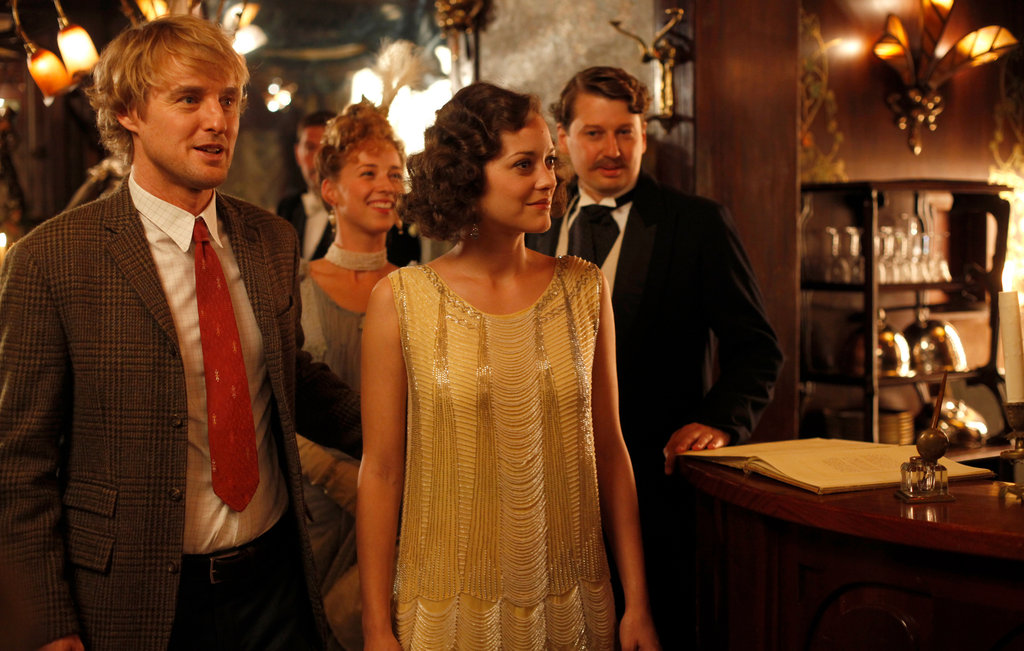
Awards: 2012 Best Writing, Original Screenplay, Nominated as Best Motion Picture of the Year, Best Achievement in Directing, Best Achievement in Art Direction
Directed by Woody Allen, “Midnight in Paris” introduces the love story of Gil Pender and Inez during their visit to Paris. On a typical midnight, while venturing around for inspiration, Gil comes across an old car that takes him to the golden ages. Men and women dressed in 1920s attire greet the screenwriter as he steps into a party crowded with famous figures. Gil, a future screenwriter, is granted the opportunity to share conversations with his idols. As the story progresses, Gil travels into the past, encountering a young woman Adriana, with whom he falls in love. Coincidentally, while on a date, the two come across a carriage that takes them back into the 1890s. Gil unwillingly escapes the century and returns to the hotel, only to find himself excitedly describing the night to his fiancé. Inez believes her husband has gone wild in imagination and dismisses his desire to walk back into Paris in the 1920s. With two opposing personalities, Gil fails to cope with Inez’s materialistic lifestyle and settles in Paris all alone.
However, the screenplay consists of multiple flaws that could’ve been improved. In general, although the plot has its distinct outline, the entire storyline and characters are underdeveloped. Whereas the appearance of famous individuals grasped much attention, the surface level analysis of each artist left as a disappointment. Almost as though the qualities of each artist were determined through a Wikipedia search, it was evident that either the director did not research these figures in depth or he was unsuccessful in bringing forth all of his knowledge. In fact, rather than mentioning briefly upon numerous individuals, the screenplay may have been more memorable with a focus on few well-known figures. Perhaps, Gil could’ve held stronger relationships with these few personages.
Moreover, along with the hurried representation of all the characters, several questions were left unanswered at the end of the movie. To begin with, the entire purpose of Gil’s visit to Paris, break up with Inez, and suggestions from the legendary artists does not come to a conclusion, and the questions remain: Was the novel published? What happened to his relationship with Inez, Adriana, or Gabrielle? Exactly what recommendations did these great novelists give? Are the clothes the only clues that hint the change in eras? The eras could’ve been crafted better with other characteristics than the mere adjustments in clothing and location. To fill in these gaps, a possible sequel to the first “Midnight in Paris” could help clarify these doubts.
Additionally, one of the most significant aspects of a screenplay, the ending, was unsatisfactory. The unexpected plot twist was a surprise to the audience; however, there were too many surprises. After Stein reads Gil’s book, she comments that Gil has not noticed his wife was cheating on him. He returns to the modern era and breaks up with Inez. Until this point, the sudden break of the engagement was a shock. Then, Gil walks into the streets and meets an antique dealer named Gabrielle and appears to fall in love once again. The separation of Gil and Inez was acceptable, but his new relationship with Gabrielle seemed too rushed. There had been no suspense laid to indicate these changes, which left the audience slightly confused. In other words, the open-ended ending was not the best choice.
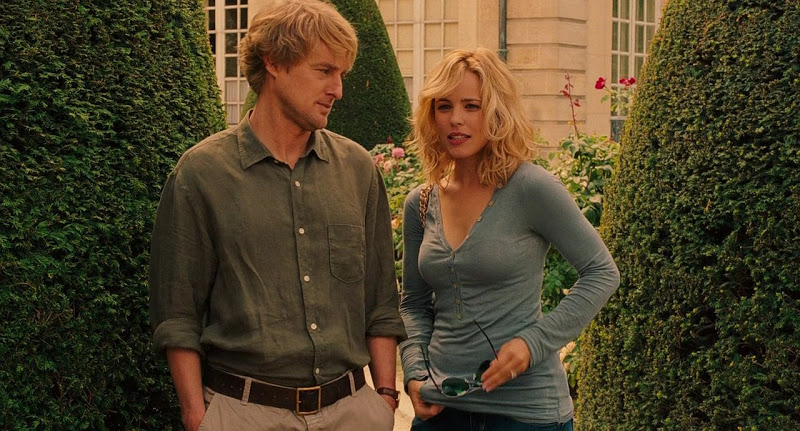
That said, a major redeeming quality of the movie was the carefully chosen cast. To help depict the party scene in the 1920s with different artists, Allen adeptly casted Tom Hiddleston to play F. Scott Fitzgerald, Corey Stoll to play Ernest Hemingway, and Kathy Bates to play Gertrude Stein. All three actors had already gained popularity through past films: Tom Hiddleston starring in “Thor” and “Avengers” as Loki; Corey Stoll starring in “Law and Order” and “The Bourne Legacy”; Gertrude Stein starring in “Misery” and “Titanic.” With these skilled actors, each artists’ special characteristics in tone or behavior were properly pinpointed and appropriately acted. Even more, the director Woody Allen had established authority through Manhattan and Annie Hall. Hence, the collaboration of famous actors and director easily captured the attention of the public when the screenplay was released.
There were innumerable reviews on this screenplay, most of which opposed one another. The majority praised the movie, calling it a “rise to perfection.” Some commented that it was a romantic comedy that should be watched to brighten one’s mood. Others believed the film was boring and a waste of time, seemingly dragging a theme-less story. Due to the fact that the movie is lighthearted and witty, it certainly will cheer up anyone. The quick scenes such as Inez father’s detective agent lost in the 1920s are memorable and humorous. Therefore, though “Midnight in Paris” may not hold the most meaningful message or the most complete story, it is a movie that is worth a watch on a gloomy afternoon.
 A WORKING VACATION