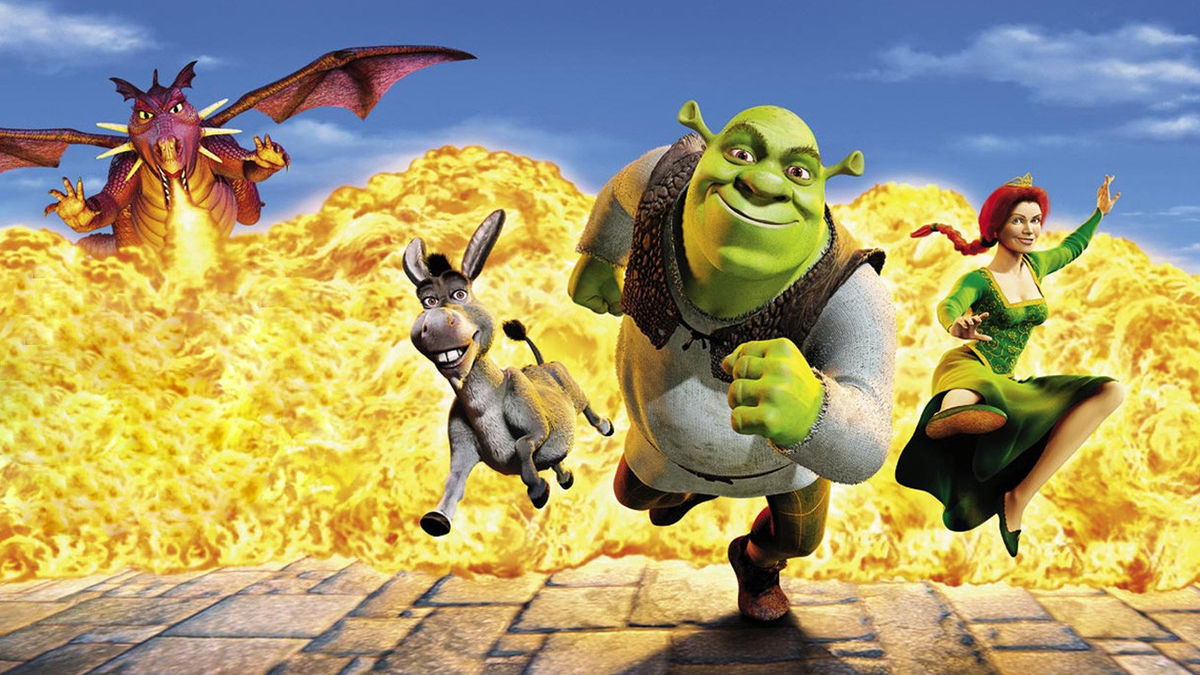
Directed by: Vicky Jenson, Andrew Adamson
Oscar Awards: Best Animated Feature, Nominated as Best Writing, Screenplay Based on Material Previously Published or Produced
When “Shrek” was released, many viewers found it either humorous or disturbing. Shrek is truly “one of a kind” because the main character not only changes stereotypes, but also sheds light on a new standard of beauty and love. Unlike most princess movies, “Shrek” introduces the idea that appearances can be deceiving.
Shrek, an ugly ogre, petrifies all of the humans with his unpleasant appearance and fearful demeanor. This leads Shrek to live a hermitic life and grow to dislike the company of others. However, when he meets Princess Fiona after rescuing her from a dragon-guarded castle, he eventually falls in love with her quirky personality. Therefore, even when Shrek realizes that Fiona is also an ogre, his fascination with her remains the same. In contrast to the other characters, Shrek had found the beauty that lay inside Fiona’s heart.
“Shrek” can be viewed as another movie about an impossible romance – this time, between an ogre and a princess. In other words, this screenplay vividly exposes the fact that love does not, or at least should not, come from simple physical beauty. Other fairy tale movies have placed great emphasis on the attractiveness of princesses. On the other hand, the characters of this movie seem to charm the audience through their eccentricity, rather than their comeliness. In fact, this movie stays faithful to the adage, “do not judge a book by its cover.” Although this statement is cliche, for young viewers, this movie allows them to learn this in an easier way.
However, this contradicts the typical idea of princess movies. Certain benefits may exist, but the theme of “inner beauty portrayed as outer beauty” is broken. Despite the fact that a “standard” of beauty is built, most princess movies end “happily ever after” with the elegant and the heroic characters marrying. Indirectly, this repetitive conclusion supports the idea that the wicked are grotesque and the good are graceful. In contrast, “Shrek” shows two ogres falling in love—the exact opposite of the traditional ending. Thus, the audience is encouraged to re-define their view of a “happy ending.”
That said, many parents found this film inappropriate for their children. This is because of the various depictions of insect consumption, mud baths, and other gross scenarios. The relevant scenes in “Shrek” were constructed with vivid, yet grimy visual effects. Therefore, in spite of the creativity of the screenplay, a great number of adults found the movie to be distasteful.
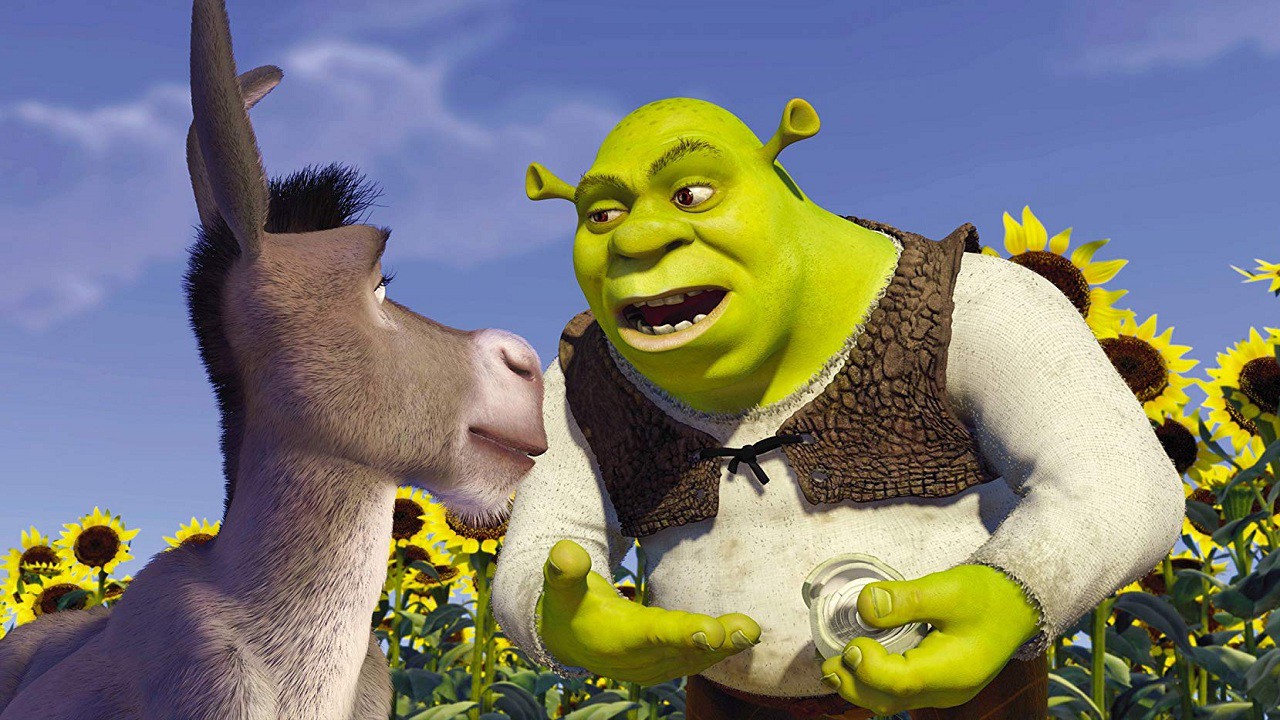
Perhaps, however, if the movie avoided the gross humor, would it have been more appealing? If the ogre was depicted in a more genteel manner, the crux of this character would be lost. In fact, his gross behaviors (such as farting in a mud bath) were comically portrayed. As such, I believe that parents who were offended need to lighten up.
All in all, this screenplay is a juxtaposition of unique characters against a typical fairy tale plot. This movie embodies both pros and cons, which is why it was both acclaimed and criticized. Yet, in the face of all of this, “Shrek” continues to stand as one of the best and most popular movies produced by Dreamworks. This popularity was enough to spawn several sequels and spin-offs.
 A WORKING VACATION