Directed by: Pete Docter, Ronnie del Carmen
Oscar Awards: 2016 Best Animated Picture & Nominated as Best Writing, Original Screenplay
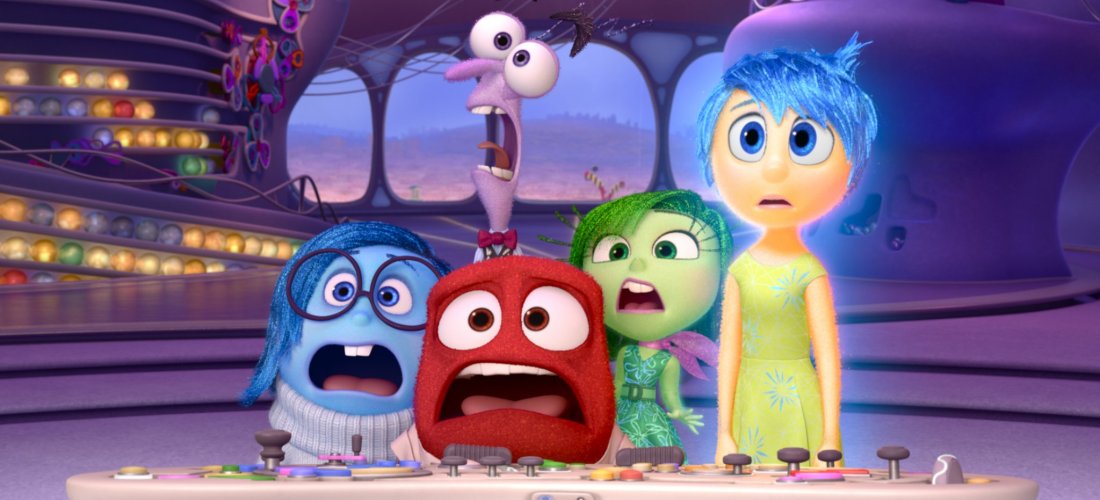
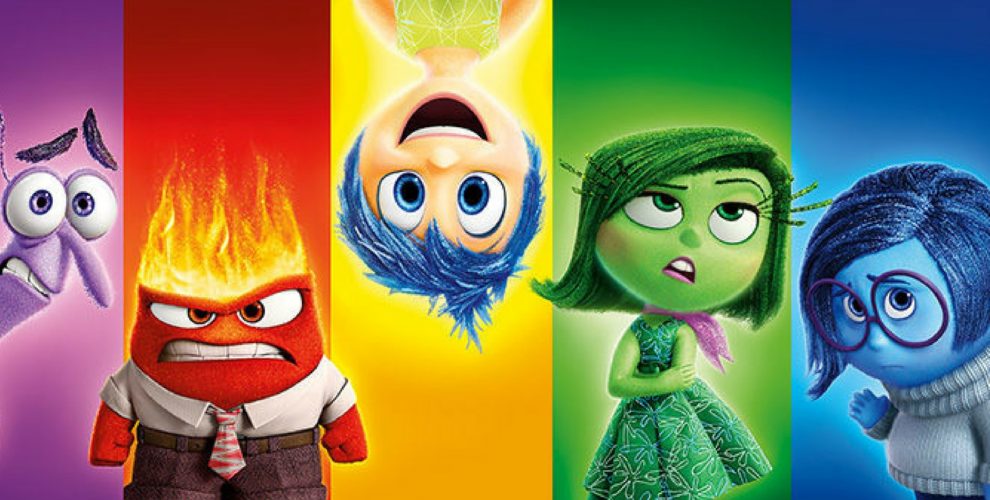
Based on an array of psychological and inner thoughts, “Inside Out” expresses the different emotions experienced by a young child named Riley throughout her childhood. Five main emotions are introduced: Joy, Fear, Disgust, Anger, and Sadness. All the emotions, except Sadness, are said to be crucial to Riley’s growth; Fear keeps Riley from physical dangers, Disgust prevents poisoning, Anger deals with self-esteem, and finally,Joy always keeps Riley optimistic. However, nobody finds the importance of Sadness as she is ordered to lock herself in the circle of sadness since she only brings down the mood. Nevertheless, at the end, all emotions are brought together in union and each memory is built with a mixture of feelings.
“Inside Out” is developed with a unique, yet engrossing plot line, which brings to light the diverse psychological thoughts of an individual as well as the correlation of thoughts and speech. In many animated movies of the past, only simple ideas such as friendship, heroism, or family relationships could be observed, but this movie works easily to explain the psychology behind our speech. The overall fact that emotions could be expressed through separate characters seems to execute the thought that the movie is original and creative.
Another component that caused this movie to be distinctive was the perspective. Structured in a third person point of view, this screenplay explains “to put yourself in someone else’s shoes”. This means, the audience views the world in Riley’s point of view. This slightly gives a break from a personalized reality, and is a chance to understand how others may be living, or how others may be affected by one’s life. For adults, this screenplay may have been an opportunity to look back at their childhood and recall all the past memories of youth. Especially because this screenplay is arranged in a young teenager’s perspective, the story is easily relatable.
Not only is this screenplay nuanced, but it also is accurate. Through this screenplay, the audience is easily able to recognize how the conversion of a short-term memory to a long-term memory occurs. Many people may believe that a possible flaw of “Inside Out” is that the facts describing the human mind are incorrect. On the other hand, numerous scientists have reached a consensus that the psychological relationships are, in fact, quite errorless.
For example, Riley’s core memories are formed from a base of a simple memory, but the idiosyncratic memories are constantly repeated, growing into long-term or core memories. These memories are most likely never forgotten as they shape an individual’s personality. This screenplay explains this psychology with the islands of personality: family, friendship, hockey, honesty, and goofball islands. Other memories, called short-term memories, may be forgotten or faded.
Despite the fact that psychology is complex, “Inside Out” makes the concept of memories and personalities simple. Likewise, the movie consists of simple, easy names, especially that of the emotions. Instead of holding twisted, intricate names that need an explanation, each of the emotions have the common names that we use on a daily basis. In this way, the names correlate to their meaning of existence. Furthermore, the repetition of emotions such as “happiness”, “joy”, or “sadness” reminds the audience of the main character’s current feeling. This allows a clear understanding of the change in Riley’s thoughts as the scene alters.
One of the most essential elements of a screenplay is the script. This movie deserves the Best Writing, Original Screenplay Oscar Award, as well as the Best Animated Picture Oscar Award. Although “Inside Out” was merely nominated for the Best Original Screenplay Oscar Award, the screenplay is worth the prize for multiple reasons. For instance, the simple diction provides a fast and straightforward comprehension of the emotional concepts. Therefore, the movie fits the appropriate audience since a wide range of ages could enjoy without much trouble.
The story provides an understanding of puberty and how youth approaches it. Through the visuals of inner thoughts, younger children may agree with Riley’s feelings. In other words, teenagers will find the feelings relatable. For example, when the father introduces broccoli to Riley, she is disgusted and also angered at the same time. These are the moments in which Disgust and Anger are introduced. Due to the collision of emotions attempting to take control of Riley’s mind, as time passes, more of Sadness, Disgust, Anger, or Fear fill her thoughts than Joy.

This process, so-called puberty, maximizes emotions of frustration to be expressed, often more than happiness. This leads to the quarrels with siblings, parents, or friends. An example from the movie would be when Joy goes missing and Riley is taken control by Anger, Fear, and Disgust. All three of them try to act as Joy, but failure leads Riley to run away from her home. When Riley overcomes this conflict, all her islands of personality rise and her thoughts mature.
“Inside Out” is praised by almost all people, but one flaw I noticed was the theme. I constantly wondered what message the director was presenting to the audience. Of course the main topic would be somewhere between coming of age and maturity; however, what would be the true purpose of creating this movie? There may have been countless reasons such as an explanation of puberty, the reason of frustrated teenagers, or so on. Despite the fact that the movie was a great entertainment, there is a slight concern about what the message really was.
In conclusion, “Inside Out” was amusing and enjoyable. Because the main emotion of all five emotions was Joy, the screenplay did encourage children to stay positive as much as possible. The statements of motivation, such as “It will be alright” or “It’s okay” brightened the overall mood of the movie. Moreover, the ending was not only satisfactory, but also inspirational as well. Even until the last moment of the movie, Joy maintains her happiness, which results in a happy ending. All the emotions cooperate in building Riley’s memories and improving her islands of personality. The last impression given by a movie impacts the reviews written by the audience, and because the end was propitious, the screenplay received much acclaim.
 A WORKING VACATION